
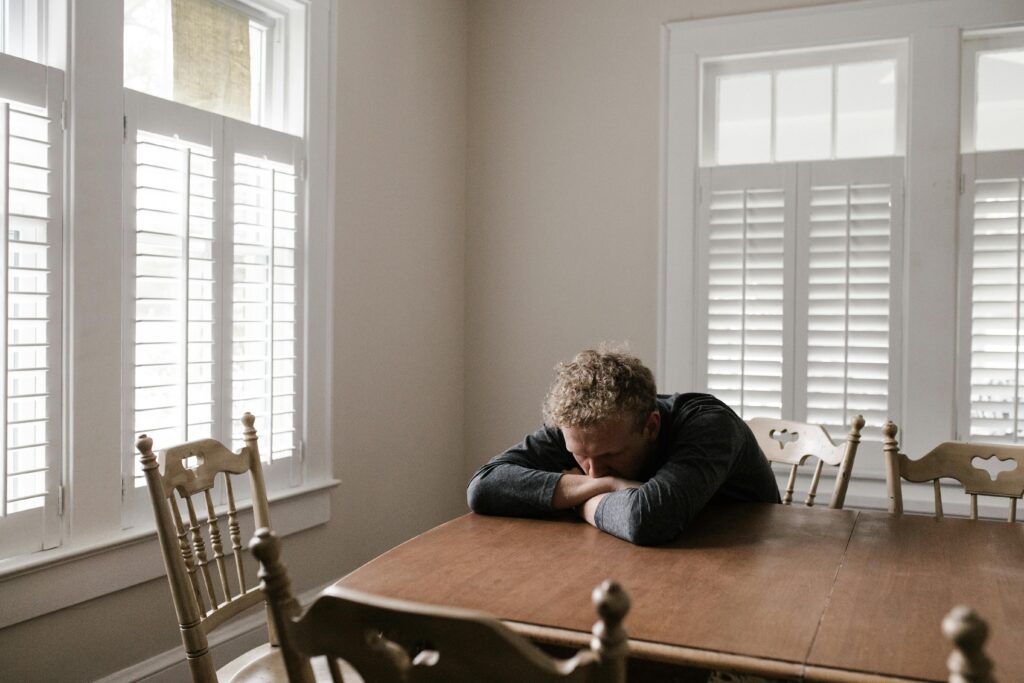
I used to think being tired was just part of caregiving. That it came with the territory—like endless dishes, midnight alarms, or doctor’s visits that always run long. I figured if I just rested when I could, drank enough coffee, and pushed through, I’d be fine.
But I wasn’t fine.
Fatigue is something you can sleep off. Burnout is when even sleep doesn’t help.
For me, the difference showed up quietly. At first, I was just worn down—forgetting small things, zoning out during conversations, feeling irritated over nothing. I’d tell myself, You just need a nap, and I’d try to shake it off. But the naps stopped working.
I’ve been caring for my wife for six years. She has multiple sclerosis, and her mobility has changed drastically in that time. We used to hike together, go to concerts, laugh about getting old. Now most days revolve around her medication, her chair, and making sure she doesn’t fall. I love her, but the weight of it—the constant vigilance—has changed me.
A few months ago, I noticed something that scared me. I wasn’t just tired. I was detached.
I’d catch myself going through the motions—lifting, feeding, helping—without feeling anything. No sadness. No frustration. Just emptiness. That’s when I knew this wasn’t fatigue anymore. This was burnout.
Fatigue tells you to slow down. Burnout convinces you there’s no point.
The first sign was losing joy in things that used to ground me. Music sounded like noise. Food lost flavor. Even when my wife smiled, I felt… nothing. It terrified me, because caregiving is built on connection. When you stop feeling, the whole foundation starts to crumble.
I finally mentioned it to her doctor at an appointment—not about me, but about her. I said something like, “I’m not sure how much longer I can keep up this level of care.” The doctor looked at me and said softly, “You’re showing symptoms of caregiver burnout.”
That sentence hit harder than I expected. I wanted to argue. To say, I’m not the patient. But the truth was, I’d become one in my own way.
I started researching, reading articles late at night when I couldn’t sleep. That’s how I learned the difference between caregiver fatigue and burnout.
Fatigue, they said, is physical exhaustion—you’re tired, overwhelmed, but you still care. Burnout is emotional depletion—you start to lose empathy, to feel trapped or resentful, even hopeless. Fatigue can be fixed with rest. Burnout needs recovery.
I realized I’d crossed that line months ago.
So, I started taking small steps back toward myself. I told my sister I needed help on weekends. She hesitated at first—she lives an hour away—but agreed to come twice a month. Those two weekends became my lifeline.
At first, I didn’t even know what to do with the time. I’d sit in the car and just breathe, like my body had forgotten what it felt like to exist without responsibility pressing on every muscle. Slowly, I began to fill those hours with small things—walking through the park, reading a book, sitting at a café without my phone. It wasn’t glamorous. But it was mine.
And something started to shift.
Fatigue began to fade once I gave it space. Burnout started to loosen its grip when I stopped treating rest like a luxury.
There are still hard days—days when my patience is thin, when guilt sneaks back in, when I wonder if I’m doing enough. But I’ve learned that burnout doesn’t disappear overnight. It’s a signal, not a sentence. A reminder that we’re human, even when caregiving demands superhuman strength.
Now, I keep a small checklist taped to the fridge—a “burnout barometer,” I call it.
If I notice these signs, I stop and reset:
- When I stop finding joy in small things.
- When I start feeling irritable for no reason.
- When I skip meals or forget to hydrate.
- When I stop talking to friends because it feels like too much effort.
- When I feel numb, not just tired.
These are my cues now—the quiet warnings that I’m slipping too far into survival mode.
I wish someone had told me earlier that self-care isn’t selfish; it’s strategy. That if you want to keep caring for someone, you have to make sure you don’t vanish in the process.
When my wife tells me, “You look more like yourself lately,” I know it’s because I’m learning to listen—to my body, my mind, my limits. I’ve stopped waiting for a crisis to justify a break. I take one because I deserve one.
Caregiving asks a lot from us. But it doesn’t have to take all of us.
If you’re reading this and wondering where the line is between tired and burned out, pay attention to what you feel when the day ends. If rest still sounds like enough, you’re fatigued. If rest sounds impossible, it’s time to ask for help.
Because the truth is, caregivers don’t run out of love—we run out of space to hold it.
And learning to rest is how we make room for it again.