I noticed it first in the kitchen.
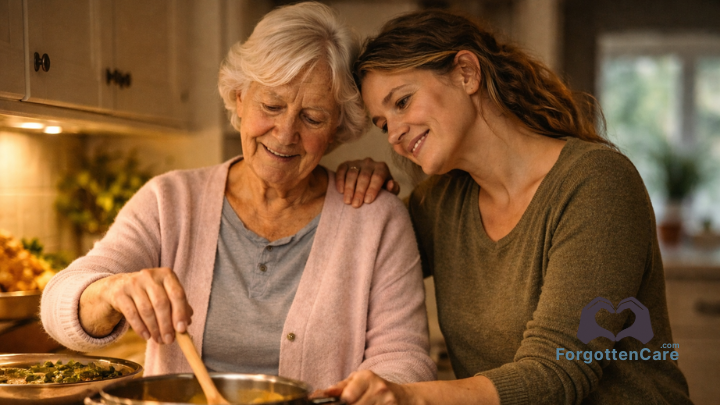
My mother stood in front of the stove, holding a spoon like it belonged to someone else. I asked her how to make the soup she used to cook every Sunday, the one that filled the house with warmth before I even stepped through the door.
She looked at me, searching. Then she shook her head.
“I don’t remember,” she said softly.
That was new.
She used to remember everything. Measurements without measuring. Timing without a clock. The kind of knowing that comes from doing something with love for years.
So I stopped asking.
Instead, I placed the ingredients in front of her, rice, ginger, garlic, and waited.
At first, nothing happened.
Then slowly, almost hesitantly, her hands began to move.
She picked up the knife. Adjusted her grip. Sliced.
Not perfectly. Not like before. But with something deeper than recall.
When I reached in to help, she gently corrected me.
“No… wait,” she said, her voice quieter but certain.
And just like that, I understood something I hadn’t been ready to see.
Her memory was fading.
But her hands still knew.
They remembered how to stir slowly, how to taste and adjust, how to move with care. The rhythm wasn’t gone, it was just living somewhere else now.
That realization stayed with me.
Because outside the kitchen, I was losing her in ways I couldn’t control.
She forgot names. Then faces. Then the thread of conversations halfway through speaking. Some days, she asked me who I was, not with fear, but with a kind of gentle curiosity that somehow hurt more.
“I’m your daughter,” I would say.
Sometimes she nodded. Sometimes she smiled politely, as if I were someone kind but unfamiliar.
Each time, it felt like a small goodbye.
But then there were moments like this.
One evening, I sat beside her on the couch, exhausted in a way that sleep couldn’t fix. Caregiving has a way of settling into your bones, you carry it even when nothing is happening.
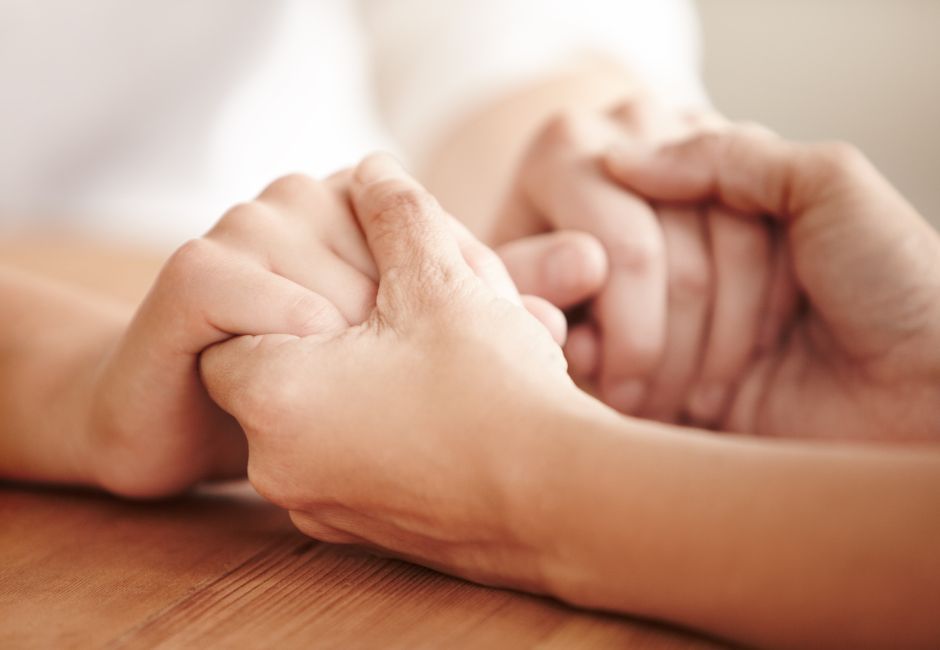
She reached for my hand.
No hesitation. No confusion.
Just a steady, familiar grip.
And I felt it, clearer than any memory she could have spoken aloud.
She knew me.
Not in the way the world defines knowing. Not through names or timelines or shared stories.
But through something older.
Through touch.
Through presence.
Through the quiet imprint of years spent loving each other.
I’ve started noticing it more now, the way she smooths the blanket over my lap without thinking. The way she pats my arm when I seem tired. The way her body leans slightly toward me when we sit side by side.
These aren’t accidents.
They are memory, just in a different language.
And I’m learning to meet her there.
To stop chasing the version of her who could explain everything, recall everything, name everything.
And instead, to honor the version of her who still feels, still responds, still loves just without words.
It doesn’t make the loss easier.
There are still moments that break me.
Moments when I want to hear her say my name the way she used to. Moments when I want one clear conversation, one shared memory we can both hold onto at the same time.
But those moments are becoming fewer.
And these quiet ones, the ones where nothing is said, but everything is felt, they are becoming enough.
Not perfect.
Not easy.
But enough.
Because I’m starting to understand something I wish I had known earlier.
Memory isn’t only stored in the mind.
It lives in the body.
In repetition. In habit. In the way someone reaches for you without thinking.
In the way love continues, even when it can no longer be explained.
She may not always remember who I am.
But her hands still remember how to love me.
And right now… I’m learning to let that be enough.