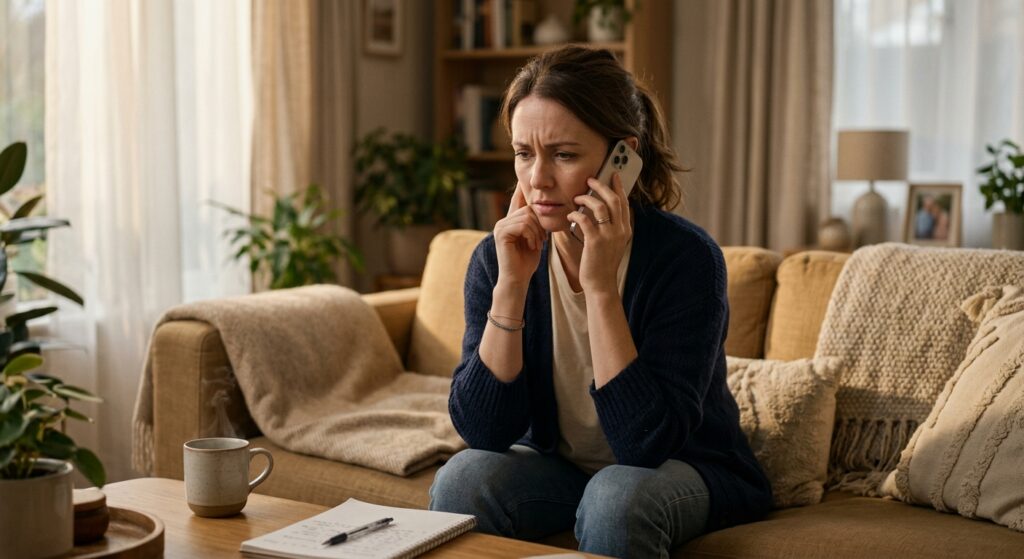
My heart felt heavy as I stared at the phone.
My mom was in so much pain.
Every word from her echoed in my mind long after we hung up.
She had always been strong, fiercely independent, a woman who faced life head-on.
But now, she was alone, battling excruciating muscle spasms that left her vulnerable.
I felt so far away, both physically and emotionally.
As I lay in bed, the weight of it all pressed down on me.
How could I help her from so far?
I remember our last conversation vividly.
She told me about the pain—the spasms, they had become her uninvited guest.
It was a pain that echoed years of injuries, the remnants of a broken shoulder that never fully healed.
In those moments, I felt both desperate and helpless.
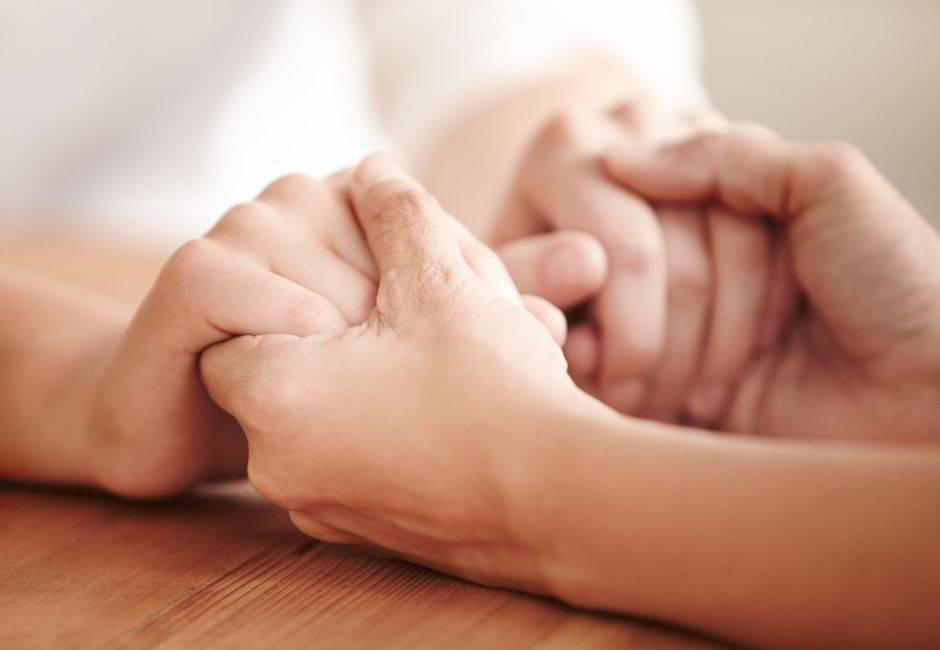
I wanted to be there to hold her, to tell her it would be okay.
But I was in another state, tethered by work and responsibilities.
Caring long-distance can feel like a cruel paradox.
How do we support our loved ones while feeling absent?
Part of me wondered if hiring a night caregiver would help ease her suffering.
But then I remembered the stories I had heard—stories of caregivers who didn’t accept Medicare.
My heart sank again.
Would my mom trust someone else in her home?
These questions lingered, taunting me with uncertainty.
I wished for a guide, a lifeline to help navigate this complex web of care.
The helplessness I felt was overwhelming.
But I had to remind myself, it wasn’t about fixing everything.
Sometimes, just being a sounding board is enough.
I pondered the alternatives for her spasms.
The painkillers seemed to multiply, a band-aid over a wound that needed healing.
As she became increasingly reliant on them, I knew I had to step into the picture.
But how could I persuade her without pushing her away?
She had never been one for physical therapy.
The idea was met with resistance, a wall I couldn’t breach.
Yet still, I longed for her to find comfort, to break free from this cycle of pain.
Was there a middle ground, a gentle encouragement that wouldn’t feel like a demand?
As I wrestled with these thoughts, I imagined her joy, her laughter—the woman who used to dance in the kitchen.
That image became my motivation.
It whispered to me to explore, to search for resources, not just for her, but for both of us.
I started looking into online support networks.
Communities filled with voices like mine—people who felt stuck geographically, yet anchored in love.
Conversations flowed, simple words providing a beacon in my ocean of worry.
Suddenly, I didn’t feel so alone.
Their shared experiences helped me feel less like an outsider in my own effort to care.
Maybe she could benefit from these connections too.
What if we could find someone else who understood her struggles?
It felt hopeful to dream of community support.
As I drifted into sleepless nights, the phone became my lifeline.
Each call reminded me of the bonds we share, no matter the distance.
I learned to listen more, to hold space for her fears, as well as my own.
Even if I was thousands of miles away, I could be her comfort.
Caregiving from afar has its trials.
But it also gives us the opportunity to connect in different ways.
To love fiercely, even when we can’t be there physically.
I realized every action counts, every effort we make resonates.
So, I continue to look for options while honoring her choices.
And in each step, I feel a glimmer of hope returning.
For now, my role is not to solve every issue but to simply be present.
It’s a journey—one filled with lessons of patience, compassion, and connection.
In this dance we call caregiving, I choose to trust that love can bridge any distance.